What IS Spinal Stenosis?
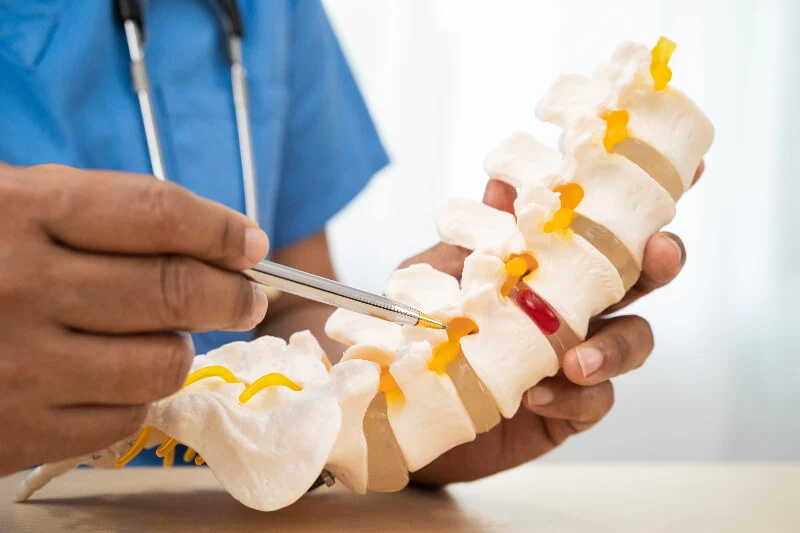
To understand what spinal stenosis is, it helps to picture your spinal column as a protective tunnel that houses your spinal cord and nerve roots. When spaces within this tunnel start to narrow (whether in your lower back, neck, or the openings where nerves exit the spine) the resulting pressure on neural tissue creates the constellation of symptoms that can significantly impact your daily life. This isn’t something that develops overnight. For most people, spinal stenosis progresses gradually over months or years, which is exactly why so many patients initially dismiss their symptoms as just normal aging or think they simply need to push through the discomfort.
The truth is that while spinal stenosis does tend to develop as we get older, it’s not something you should accept as an inevitable part of aging that you just have to live with. When the spinal canal narrows, nerves that control sensation, movement, and function throughout your body get compressed. That compression explains why spinal stenosis symptoms can be so varied and why they often seem unrelated to each other at first. You might experience chronic pain, certainly, but many patients also deal with numbness, tingling, weakness, or even balance problems that make them feel unsteady on their feet. Some people notice their symptoms come and go depending on their position, as sitting often feels better than standing, and leaning forward while pushing a shopping cart might provide temporary relief.
What makes this condition particularly frustrating is how unpredictable it can be. One day you might walk a mile without much trouble, and the next day you’re struggling to make it halfway down your street before the pain forces you to stop and rest. This inconsistency doesn’t mean you’re imagining things or that the problem isn’t serious. It reflects the complex way nerve compression works and how factors like inflammation, body position, and activity level influence your symptoms. Understanding that spinal stenosis is a legitimate medical condition with real mechanical causes helps many patients feel validated in seeking treatment rather than continuing to suffer in silence or feeling like they should just be able to power through.
What causes spinal stenosis?
Age-related changes in your spine are by far the most common culprit behind spinal stenosis, but that doesn’t mean everyone who gets older will develop this condition. As the years go by, the soft discs between your vertebrae can lose height and begin to bulge, ligaments that support your spine can thicken, and facet joints can develop arthritis that causes them to enlarge. Any of these changes can encroach on the space available for your spinal cord and nerves. Sometimes the stenosis affects the central canal itself, while other times it happens in the foramen, or small openings on either side of your spine where nerve roots exit. When foraminal stenosis develops, you typically experience symptoms on one side of your body because a specific nerve root is being compressed.
Degenerative disc disease accelerates this process in some patients. When discs wear down, your vertebrae move closer together, which can cause bones to shift and ligaments to buckle into the spinal canal. Arthritis of the spine, particularly osteoarthritis, contributes significantly to stenosis development as bone spurs form in response to joint degeneration. If you had a back injury decades ago that seemed to heal fine, the resulting scar tissue or subtle misalignment can set the stage for stenosis to develop later. Other factors like spondylolisthesis, where one vertebra slips forward over another, or inherited conditions that affect spine structure can also lead to canal narrowing.
Less commonly, other medical conditions contribute to spinal stenosis. Tumors within the spinal column, Paget’s disease affecting bone growth, prior spinal surgeries, or congenital conditions where you were born with a narrower spinal canal can all increase your risk. Some people develop what’s called tandem stenosis, where narrowing occurs in multiple areas of the spine simultaneously, compounding symptoms and making treatment planning more complex. That’s why getting an accurate diagnosis through imaging and clinical examination is so important. Knowing exactly where the stenosis is occurring and what’s causing it allows us to develop the most effective treatment strategy for your specific situation.
Common Treatments for Spinal Stenosis
The good news is that many patients respond well to conservative spinal stenosis treatment without needing surgical intervention. Our approach starts with understanding how your symptoms affect your daily life and what your goals are for treatment. For some people, being able to walk comfortably around their neighborhood or play with grandchildren is the priority. For others, it’s about maintaining their ability to work or participate in hobbies they love. These individual goals guide our treatment recommendations and help us measure success in ways that actually matter to you.
Physical medicine plays a central role for many patients, focusing on exercises that open up space in the spinal canal, strengthen core muscles that support your spine, and improve flexibility and posture. Movements where you bend forwardvoften feel better because this position increases the diameter of the spinal canal slightly, taking pressure off compressed nerves. Anti-inflammatory medications help reduce swelling around irritated nerves, while medication management can address both pain and the underlying inflammatory processes driving your symptoms. Some patients benefit from assistive devices like canes or walkers that allow them to maintain the slightly forward-leaning position that relieves their symptoms.
When conservative measures aren’t providing enough relief, interventional procedures offer another tier of treatment before considering spinal stenosis surgery. Epidural steroid injections deliver powerful anti-inflammatory medication directly to the affected area, reducing nerve root inflammation and providing relief that can last weeks or months. These injections often buy valuable time that allows physical therapy and other conservative treatments to work more effectively.
The reality is that while surgery becomes necessary for some patients, particularly those with severe symptoms, progressive neurological deficits, or loss of bowel or bladder control, many people manage their spinal stenosis successfully with a combination of non-surgical treatments that let them maintain their quality of life.
Get Spinal Stenosis Relief in Frisco, Plano, McKinney, and Beyond
Our team at Pain Management of North Dallas takes a different approach to treating spinal stenosis than you might have experienced elsewhere. Rather than immediately jumping to surgery or simply prescribing pain medication and sending you on your way, we invest time in understanding the specific characteristics of your stenosis and how it’s affecting your nervous system function. Advanced imaging helps us visualize exactly where narrowing is occurring and how severe it is, while thorough clinical examination reveals which nerves are being compressed and how that compression is impacting your strength, sensation, and reflexes.
We have convenient locations throughout Frisco, McKinney, Plano, and Dallas, making it easier for you to access regular care without exhausting drives across the metroplex. Our board-certified physicians bring decades of combined experience treating spinal stenosis and understand both the medical complexity of this condition and the very real impact it has on your ability to do the things that matter to you.
Ready to get help with your spinal stenosis symptoms? Call our team now or request an appointment online today to get relief as soon as possible.
Frequently Asked Questions About Spinal Stenosis in North Dallas
Will my spinal stenosis continue to get worse over time?
Spinal stenosis tends to progress slowly in most cases, but the trajectory isn’t the same for everyone. Some patients stabilize at a certain level of symptoms and maintain that baseline for years with appropriate management. Others experience gradual worsening that requires adjustment of their treatment plan over time. The key is regular monitoring and proactive treatment rather than waiting until symptoms become severe before seeking help. Early intervention often allows us to slow progression and maintain better function long-term.
How do I know if I need surgery for my spinal stenosis?
Surgery typically becomes necessary only when conservative treatments have failed to provide adequate relief, when you’re experiencing progressive neurological deficits like increasing weakness or numbness, or when you develop cauda equina syndrome—a rare but serious condition involving loss of bowel or bladder control. Most patients don’t need surgery, and even among those who do eventually require it, many benefit from months or years of conservative management first. We’ll be honest with you about when surgery should be considered and help you make an informed decision based on your specific situation.
Can spinal stenosis cause permanent nerve damage?
Prolonged severe compression can potentially cause lasting nerve changes, which is one reason we take spinal stenosis symptoms seriously even when they’re still relatively mild. However, with appropriate treatment most patients avoid permanent damage. Nerves are remarkably resilient and can often recover function once pressure is relieved, though recovery may take time. This is another reason early intervention matters—addressing compression before it becomes chronic gives you the best chance of complete symptom resolution
What's the difference between central stenosis and foraminal stenosis?
Central stenosis refers to narrowing of the main spinal canal that houses your spinal cord or cauda equina, while foraminal stenosis involves narrowing of the small openings where individual nerve roots exit the spine. Central stenosis often causes symptoms in both legs and may involve balance problems or widespread numbness, while foraminal stenosis typically affects one side of your body more than the other since it’s compressing a specific nerve root. Some patients have both types simultaneously, which influences our treatment approach and the pattern of symptoms you experience.